


Coaches Manual – 10 Week Plan
Coach Overview
Thank you for signing up for the Sport for Lives Coaches’ Plan. We are immensely grateful for the support we receive from people who act on their belief that each of us truly do have the power to make a difference.
The Sport for Lives Coaches’ Plan is designed with you in mind.
We know that you have your hands full with many of the practicalities involved in bringing out the best in your players on the field. We also know that sports achievements, and even fundraising, is only one small part of the Sport for Lives journey. We are excited to partner with you to bring about lasting change both on, and off, the field.
This 10-week plan, aimed at those who coach sport in the South African privileged school sector, covers important topics for you and your team to discuss and process as a tandem experience to training and fundraising, focusing on personal development and responsibility as well as effecting societal change.
Thank you so much for being a part of the Sport for Lives journey. We are so excited about the change we can bring together on and off the field. Sport has always been a great way to bring people together and find common ground; and we need that now more than ever before.
Although it is easy for us to focus on raising money through our tries, goals or sporting achievements it’s obvious that will bring no lasting change. At Sport for Lives we believe real change starts one person at a time and only by taking responsibilities for ourselves can we begin to create peaceful, prosperous, and more equal societies.
We have designed a 10 Week Course that we hope will help your athletes not only prepare physically and mentally for life on the sports field, but also for navigating day-to-day life in South Africa, with all its challenges, hardships, joys, and opportunities.
We think this is important because true hope requires an outlook that chooses positivity over disillusionment, despite previous disappointments. Contrary to popular notions, this is not the easiest choice. With you as leader, coach, and teacher, we are confident that together we can inspire child-like hope in your players; the kind that
believes small, individual changes made for the right reasons can make a real difference.
We are asking you to take the time to teach your kids that by their everyday choices they can affect the world in them and around them and maybe, just maybe, if enough of us do it well and for the right reasons for a long time, who knows, maybe things may look different for your kids and theirs.
Week 1
The Power of Sport

On the 11th of February 1994, Nelson Mandela emerged from Robben Island prison holding his wife Winnie’s hand in his own.
Mr Mandela spent 40 years in prison sleeping on a concrete floor. Winnie had months in solitary confinement away from her children and yet there they were, despite so much adversity, wearing proud, wide smiles and showing hopeful hearts for the dawn of the new South Africa.
Five short years later and Mr Mandela transitioned 400 years of unforgiveness, racism and injustice to join arms with Francois Pienaar in the 1995 Rugby World Cup. It was not only one of the greatest sporting triumphs of our country’s history, but quite possibly one of history’s greatest triumphs of the human spirit.
Now, almost 30 years later, although so much and so little has changed, sport still unites. Because on the field, court, pool, or road we are just humans. Equals, teammates and competitors. Sports keeps things simple; privilege matters a little less, pain doesn’t hurt as bad and we can connect with those on and off the field without the social
barriers our parents once knew.
Questions:
- What are some of the challenges young South African’s face today?
- What human qualities will be required to meet and overcome those challenges?
- Which of those qualities do we get to practice on the sports field today?
Week 2
The Problem with Inequality

South Africa is the most unequal country in the world. That’s not something you want to win a trophy for! In 2017 the richest person made 1338 times more than the poorest in the same company.
Here is a scary thought – 1% of our population controls 70.9% of the wealth, and 60% of people cannot afford food, toothpaste, or shoes (depending on which poverty line you are using). It’s glaring. Three of the five most dangerous cities in the world are in SA, six of the ten. This makes us a sick society.
When 1% of people have so much and 60% of others so little it shouldn’t surprise us. Inequality has never been the way humans were designed to live, and when we do everyone suffers. A team of 100 medical scientists recently showed that the most unequal countries in the world are the most depressed, most obese, have highest use of alcohol and drug abuse and the worst education. This is true for the rich and the poor.
We tend to hide from things that make us feel uncomfortable.
We hide behind high walls. We hide behind secure gates and airtight sign-in procedures. We hide with people like us. We hide with friendly waves while millions starve and suffer. The truth is that sometimes we have reason to hide; corruption, incompetence, state capture and unaccountability – all of that creates a numbness we cannot ignore.
Here is the problem though – if inequality stays, so does pain, crime, anxiety and all the ways we try to cope with them.
Questions:
- What is the hardest thing about being a South African?
- What is the best thing?
- Have we given up fighting for our country? Have we even started?
Week 3
It’s Hard to Be Human

It is hard to be a human sometimes.
When you have so much, and others have so little it is easy to think you are either a) better than them or b) need to help them. Sometimes we let this happen in our heads without even knowing it.
It starts by judging each other by the clothes we wear, the school we go to, the house we live in or the area we are from. If people look and sound and smell like us, being ourselves comes naturally (most of the time). But, when people are different from us, it’s not so easy.
Have you noticed that sport cuts through that noise?
It reminds us over and over again that what matters is what is inside a human. Who they really are (and not what we see). It is their courage to push through the aching legs or make a huge tackle. It’s their kindness in showing an opponent respect and gentleness; their discipline to develop skills and compete with integrity.
On the sports field our school heroes are made by how they behave and who they are inside, and we celebrate them for that and treat them with the respect and dignity they deserve. In doing so, we learn a great lesson for life.
Questions:
- What are the qualities you admire most in a human?
- Do we place the brands of sports gear or shoes we wear above those qualities when choosing friends?
- Why do you think that is?
Week 4
We’re Not the Saviour

Many of us like to think of ourselves as heroes who know a lot, have a lot, and can do a lot. Our position can make us think that we are able to “save” those less fortunate than we are.
The problem with this idea is that although it is shrouded in good sentiment, our ego is at its centre. We can be tempted to elevate ourselves, and feel good about ourselves and our contribution, while behaving condescendingly toward others. Helping people can be so nice when important ‘us’ gets to help small, ‘helpless’ other people. It can make us feel so good.
The problem is by doing that we keep ourselves feeling big (especially if other people see us doing it) but we also have a very good chance of making the other person feel really small. And that’s not cool.
But here is the thing; a lot of people we think have – ‘nothing’ – have experienced meteoric rises against the injustice of apartheid, colonialism and have changed so much about their lives because they have chosen to act with so much courage and intelligence, fighting to better their lives that, in truth, we should be kissing the ground they walk.
Imagine treating a person like that by mistake as someone who we thought needed saving?
The truth is we’re not anyone’s saviour. In fact, the person inside (that is us) is the only one we can really ‘save’ and is therefore worthwhile focusing on. When we give, when we serve, when we love and talk with respect and dignity to those around us, when we make attempts to connect in spite of racial boundaries and privilege, our goal is to make other people feel like we would want to feel.
Loved, respected, safe, seen.
Questions:
- What do you think it means to have a saviour complex?
- Why do you think it is a bad idea?
- If we are going to serve others, what do you think the best way to do it is?
Week 5
Big Vs Small

We think change comes by big interventions. Big movements or causes. But lofty ideals burn brightly in a moment and fade just as quickly. What if we were inspired by the world on our doorsteps? The one in our control. The world in front of our noses that we can change one, small, tiny choice at a time.
There is a well-worn parable that is helpful when thinking about this. The one where the old man tells the young boy to stop throwing starfish back into the sea because there are so many thousands that the ‘kid’ is never going to make a difference (you will find it online – search Starfish story). The boy’s response is profound as he throws another starfish back into the sea, ‘it made a difference to that one’.
As a society we are sick and tired – jaded, worn out, hurt, disillusioned and embittered – by so many shattered dreams and hopes as we survey the wreckage of the ‘beach of South Africa’ and millions and millions of humans who are still stuck in poverty. It is so easy to see – ‘our’- story like that old man did his: with hopelessness.
But the child is right. Imagine what that one (or 10 or 20) starfish felt as the little boy hurled them back into the sea and it breathed as if for the first-time, delicious oxygen and a bit more opportunity to grow.
Questions:
- What choices can you make in your own life that will bring hope to you and those around you?
- What change is in your control today?
- What are the starfish in your world (think your own life and those around you) that you are not taking the time to change?
Week 6
Uneven Playing Field

Imagine you started the race of life in the back of the pack. Imagine you went to school with 60 other kids in the class. Imagine you were in a family of nine brought up by your grandmother? Imagine there were lots and lots of nights that you went to bed hungry.
Sociologists have a term they use to describe how easy it is for someone like that to better themselves with a university degree or better job, they call it – ‘upward mobility’.
South Africa is the country with the 5th lowest upward mobility in the world. The only countries where it is harder to improve your life are Bangladesh, Pakistan, Cameroon, Sengal, Côte-d’ivoire.
Now imagine, in that society, that after school you get a job as a bag packer at Boxer and you work hard, saving your income. You then get a job at British American Tobacco. You might start a family, buy a beautiful home and VW Polo. Perhaps, you start your LLB degree at 32 and qualify as a lawyer. You love your spouse and kids. You take some of your savings and you start a business, a store right by your house. You start making good money. Real money.
You have won a rigged game.
In one generation you have gone from the back of the pack, the very last, to right up front. How should society treat people like that? People who have such courage and resilience not to be defeated by an impossible situation? Who work so much harder, walk so much further to get to school, who take defeat after defeat and keep getting back up?
Maybe there is one great word for it – admiration.
Questions:
- How do we measure success in society?
- Did all South African’s start life in the same place and get to play by the same rules?
- In reflection, are there people you know who have succeeded in life’s game in an unimaginable way who we have never noticed before?
Week 7
Warriors
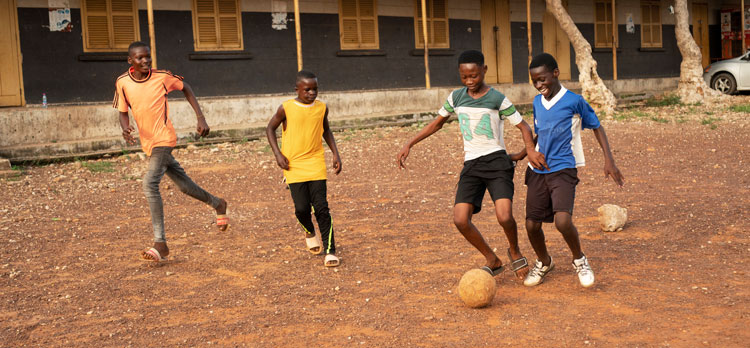
Psychologists around the world are sounding the stats alarm, stating that the number of kids of privilege suffering from depression and anxiety is rising each year. It’s horrible and truly terrifying for those trapped in it.
In South Africa, each year thousands of kids pass matric and are accepted to university despite living in scary, violent areas where the threat of rape, theft or murder constantly hangs over their heads. These kids, helped by grandparents, parents or siblings, work hard to fill in the gaps that their school education may have left out so they can achieve upward mobility.
They fight through university with student loans or huge sacrifices from family, living simply, learning harder, bettering themselves one good choice after the next, day after day, year after year.
Like warriors they battle adversity and prejudice and win again and again until they take their rightful place in society.
What could we learn about resilience if we asked?
Questions:
- Is there something to learn from 70% of South African who live in threat of falling into poverty?
- When someone faces adversity with a smile day after day, what is that? What can we learn from that? How do we view their journey?
- Can privileged people benefit as much if not more from interacting with people who have less and why?
Week 8
Equals

If your opponent kicks your ass on the sports field, respect is what they should have earned. If they treat you fairly, and with dignity while playing, you would be in the wrong to treat them with anything other than admiration. If they offered you advice on how to improve your game would you take it? Would you listen?
In the game of life if you have lots of money and privilege and someone who doesn’t look, sound, or talk like you has resistance, courage and success, would you learn from them? Would you be prepared to see who they are, what they have achieved and listen?
Would you take their advice and imitate their behaviour if it made you stronger, better, kinder, and more ready for the game of life? Would you learn from their example as you shared your financial privilege and opportunities?
Questions:
- Do people with privilege have the monopoly on success?
- What can we learn from people who are succeeding in ways we have never seen before?
- How do we love and serve people with our resources while taking the time for them to love, serve and teach us?
Week 9
Love

How do you like to be loved? Is it a great gift or kind words or hugs or a helping hand? And when you are loved, how does it make you feel? Safe? At peace? Like all is right in the world?
The greatest gift we can give others (and ourselves) is the love we all deserve. There are lots of different kinds of love – a special kind of love for your parents and families and best friends and partners. That is intimate and sacred and shared only with trust. But there is also the love we want to get from teachers, kids at our school, our parents, friends, and people we meet. And then
there’s love for strangers. People we don’t yet know. Those who are different from us. There are degrees of intimacy and trust, which is important, but at the end of the day all those types of love offer us a similar thing – love shows us that we have value.
It is love that lets us know we are seen; that people don’t look down on us, or judge us, or pretend like they are better than us. And that feels good, like both a gift and a right.
The good news is every day, to every single person we meet, we get to give that gift away. We can’t control how other people behave towards us, but we can control ourselves and love is an easy choice to make if we do it one person at a time.
Questions:
- What does love look like on the sports field?
- What does love look like to strangers, people of different races and genders and privilege?
- What does love look like to someone who has much more than us and much less than us?
Week 10
Chance

School can be all blah, blah, blah. Teachers telling us how to be better. What to think. How to behave, and a lot of the time it is boring, annoying and confusing when we are just trying to figure out our own stuff.
But look up. Look over the fences of your sports field. Look out. Imagine South Africa that is. The most unequal country in the world with challenges that are terrifying and opportunities that are mind boggling. That is your country.
All this stuff. This privilege, love, dignity and change. That stuff is real. Today you get to decide what your country looks like to the person inside and in-front of you.
Questions:
- What does it mean to take responsibility for yourself?
- What does it mean to take responsibility for your country?
- What does it mean to take responsibility for those around you?
Note
Make sure conversation stays on track. The only choice these kids can carry is to control themselves and love those around them a little bit better every day. No one (not many of us anyway) are designed to carry the weight of a nation on their shoulders and we certainly should do our best to lift that weight off kids coming into the world.
